When the Tourists Leave, the Real Work Begins: A Winter Night Inside Paphos Theatre
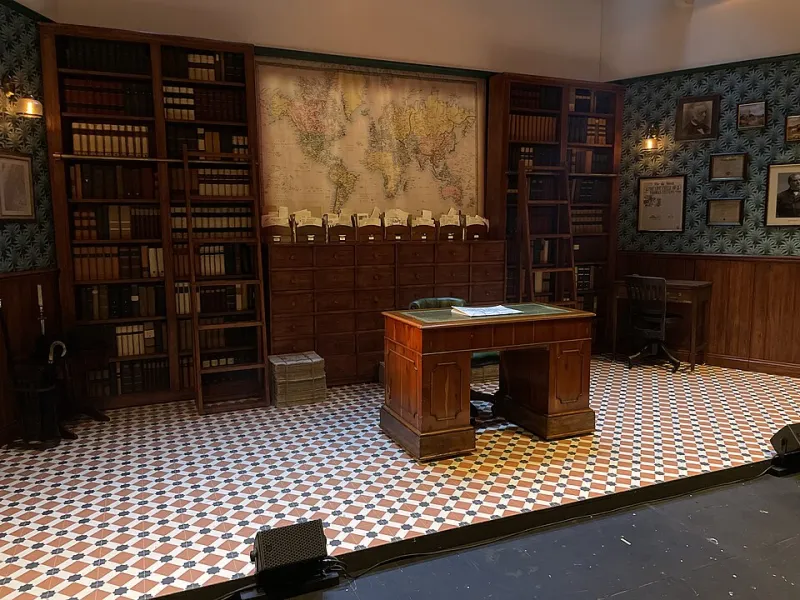
Photo: Alex Chan, CC BY 2.0, via Wikimedia Commons
Walk past Paphos Theatre on a January evening and you might assume we've closed up shop. The promenade is nearly empty, the sea is doing its dramatic winter impression, and the only applause you'll hear is the wind coming off the harbor. But push open the side door and you'll find the truth: the theatre never actually sleeps. It just changes costumes.
The Light That Stays On
Ask any American stagehand about the ghost light and they'll tell you it's tradition — a single bulb left burning on an empty stage, part safety measure, part superstition. Ours burns all winter too, but here it feels less like superstition and more like a promise. As long as that light is on, somebody is coming back.
That somebody, most Tuesday nights, is Elena. Retired from decades of teaching in Nicosia, she's the unofficial keeper of our costume archive, and she treats it like the Library of Alexandria. Velvet cloaks from a 2011 production of The Tempest? Tagged, wrapped, and cataloged. A sheepherder's coat from a Cypriot folk drama that predates most of our current volunteers? Handled with white gloves and a level of reverence usually reserved for museum pieces.
"People think the season ends when the last show ends," she told me, pinning a fresh tag to a corset from last fall's musical. "The season ends when the costumes are ready for the next one."
A Year-Round Production Nobody Buys Tickets For
Here's what most visitors — and honestly, plenty of locals — never see. Between the final curtain in October and opening night in spring, a rotating crew of maybe a dozen people does the work that makes the whole next year possible.
The stage gets its annual inspection. Salt air is not kind to plywood, and our boardwalk-adjacent location means every winter brings a fresh round of sanding, sealing, and repainting. The scenic team, the same folks you read about building sets from scratch, spend the quiet months in repair mode rather than creation mode.
The archive gets organized. Programs, photographs, and press clippings going back years are scanned and filed by a volunteer who insists he's "not a computer person" while maintaining a spreadsheet that would impress a Fortune 500 intern.
And the next season gets planned — argued over, really, over thermoses of coffee and plates of kourabiedes. Which plays will fill our seats? Which will challenge us? Will the tourists come back in the numbers we hope? These debates are loud, affectionate, and occasionally unresolved until March.
Why Winter Is When Community Theatre Gets Real
Anyone who's been involved with a community theatre back in the States — a converted church in Ohio, a storefront in Chicago, a barn in Vermont — knows this rhythm. Summer is the performance. Winter is the commitment.
It's easy to love theatre on a warm June night with a full house and a sunset for a backdrop. It's another thing entirely to show up on a rainy Tuesday in February to steam-clean costumes for shows that won't premiere for five months. That's the part that separates a venue from a community.
And that's why our off-season crew matters. These are the people who answer when a director calls in November asking whether the light board can handle a new design. They're the ones who notice a loose stair tread before an actor does. They plan the spring auditions, line up the volunteer schedule, and quietly make sure that when the cruise ships return and the promenade fills up again, everything is ready.
Come See What You've Been Missing
If you're visiting Paphos between November and March, don't write us off. Yes, the main stage is dark. But we run winter workshops, occasional staged readings, and — if you ask nicely — somebody will probably give you a backstage tour that ends with Elena showing you a costume that's older than the republic.
And if you're local? The door is genuinely open. We need hands with paintbrushes, eyes for spreadsheets, and people willing to argue about next season's lineup over coffee. No experience required. The off-season is exactly when newcomers learn the place, before the beautiful chaos of opening nights begins.
The ghost light will be on. It always is. It's not waiting for an audience — it's waiting for you.