Five Languages, One Smile: The Front-of-House Faces Waiting for You at Paphos Theatre
There's a moment that happens at Paphos Theatre almost every night, and it happens before anyone checks a ticket.
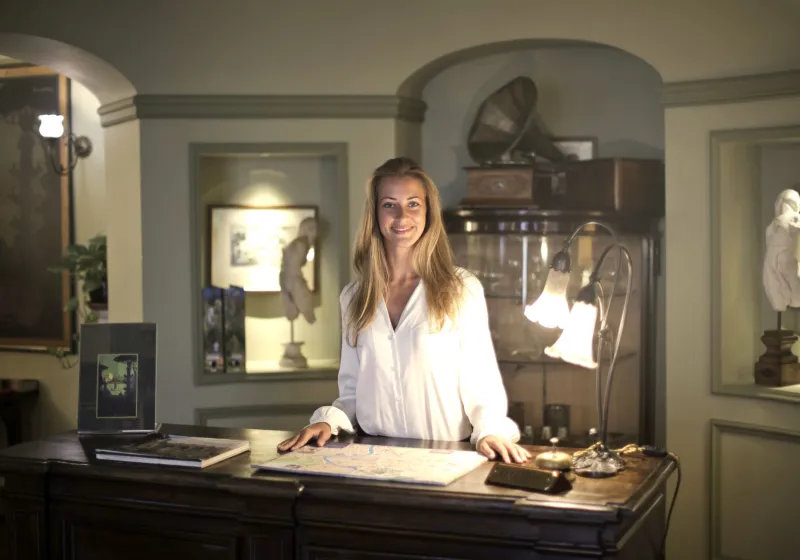
A visitor walks in — maybe off a cruise ship, maybe down from a rental apartment in the Old Town — looking a little unsure. Within thirty seconds, someone has said hello, figured out where they're from, and pointed them toward the best seat with a sea breeze. That someone is usually one of our front-of-house volunteers, and honestly, they're half the reason people come back.
The Woman Who Can Welcome Anyone
Start with Maria. If you've been to a show this season, you've probably met her — she's the usher who seems to speak every language walking through the door. Greek and English, obviously. But also Russian, Romanian, and enough German to get a Düsseldorf couple to their seats without a hitch.
"People relax the moment they hear their own language," she told me between performances. "After that, it doesn't matter if my grammar is perfect. They know they belong here."
Maria moved to Paphos from Limassol eleven years ago "for love and quieter mornings," and she's been volunteering ever since. She keeps a mental map of which seats catch the breeze and which get the late-afternoon glare. Ask her where to sit and you'll get a better answer than any booking app.
The Box Office Is a Conversation, Not a Transaction
Our box office runs on volunteers, which means buying a ticket often turns into a ten-minute chat. George, a retired hotelier from Manchester by way of Toronto, staffs the window most weekends. He'll tell you which night the cast is tightest, which show is best for kids, and — if you're American — he'll inevitably ask what part of the States you're from.
"I've had folks from Ohio, Texas, Portland," he says. "They always say the same thing: this feels like the little theatre back home. The one where everybody knew your name. That's the compliment I live for."
It's a comparison we hear a lot from American visitors, and we've stopped being surprised by it. There's something about a community stage run on goodwill — where the person tearing your ticket might also be in Act Two — that echoes the summer stock traditions of small-town America. Vermont, Iowa, Michigan's lake towns. The details differ; the spirit doesn't.
Concessions with a Side of Philosophy
Then there's the concession stand, which on busy nights is less a snack bar and more a salon. Elena, a seasonal worker who spends summers in Paphos and winters in Thessaloniki, runs it like a hostess. She remembers that the couple from Chicago likes two glasses of the local rosé, that the family from Boston needs juice boxes before the second act, and that everyone, everywhere, appreciates a good baklava at intermission.
"The stage gets the applause," Elena laughs. "But I get the gossip. Best job in the building."
Why It Matters
Theatre people love to talk about what happens under the lights, and fair enough. But the truth is that an evening at Paphos Theatre starts at the door — with a greeting in your language, a recommendation from someone who actually knows the show, and the unmistakable feeling that you've walked into a friend's living room rather than a venue.
For locals, these volunteers are neighbors. For visitors — especially those from the States, where big-city theatre can feel polished but impersonal — they're the difference between seeing a show and experiencing one.
So the next time you come to a performance, arrive a few minutes early. Say hello to Maria, George, or Elena. They'll ask where you're from, and they'll genuinely want to know the answer.
The lights go down soon enough. The welcome is the part you'll remember.