Scooters, Sunscreen, and Stage Directions: The Real Commute Behind Our Curtain
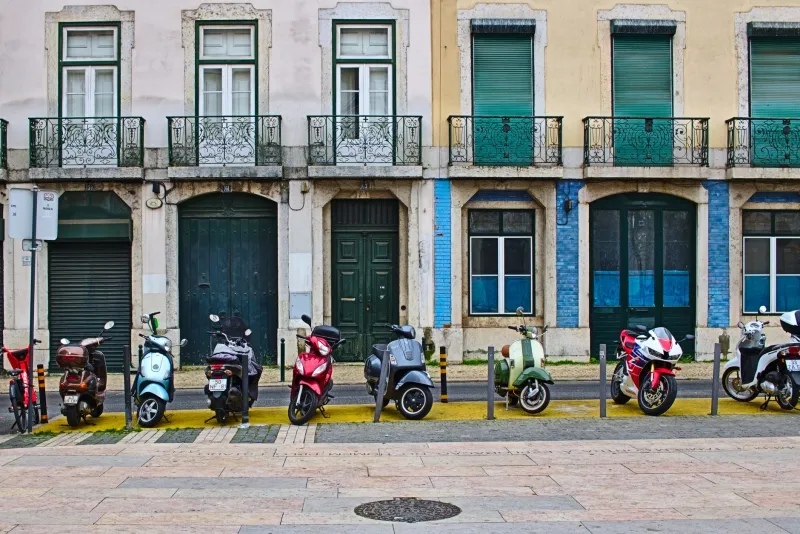
If you've ever sat in our audience on a warm evening and marveled at a full cast hitting every cue, here's a secret: half of them probably arrived out of breath, helmet in hand, still smelling faintly of sunscreen and espresso. Community theatre in Paphos doesn't happen in spite of island life — it happens tangled up in it.
The Moped Mafia
Ask any director at Paphos Theatre about their biggest casting challenge and they won't say accents or memorization. They'll say parking. Or more accurately, the lack of a problem with parking, because so many of our actors never bring a car at all.
Take Maria, who's played everything from Shakespearean heroines to a singing crab. She arrives by scooter, script pages tucked into her jacket like a very literary delivery order. Or Petros, a waiter at a harborside taverna, who coasts in on a bicycle older than most of our set pieces. On summer nights, a small row of scooters lines up outside the stage door like the world's most theatrical motorcycle club.
There's a charm to it, sure. But there's also logistics. A scooter can carry a person and maybe a small prop bag. It cannot carry a costume rack. Which is why our actors have developed a kind of informal carpool network that would impress a logistics firm — one cast member with a hatchback becomes the unofficial set-transport coordinator, whether they volunteered for the job or not.
Scheduling Around the Souvlaki Rush
Here's the thing about a community theatre on an island that lives on tourism: your cast doesn't clock out at five. They clock out when the last tourist orders dessert.
Our rehearsal schedules read like tide charts crossed with restaurant rotas. Directors learn quickly that Monday and Tuesday are golden — the slow nights in the hospitality world — while Friday rehearsals are a fantasy. Someone's always on shift. Someone's always covering for a colleague whose flight got delayed. Someone's aunt from Limassol decided to visit, and family comes first, as it should.
The solution isn't a rigid calendar; it's a philosophy. We run rehearsals in modules, working scenes in whatever combination of actors actually shows up. If the two leads can't make it, we pivot to the ensemble number. If half the cast is stuck at a hotel banquet, the director runs line-throughs with whoever's free. It sounds chaotic. Sometimes it is. But it's also why our actors can deliver a polished performance after rehearsing their scenes, collectively, rather than all together, until the final week.
Lessons for American Volunteers
If you're part of a community theatre back in the States — say, a small company in Ohio or a summer troupe in the Carolinas — you're probably nodding along. Your cast has day jobs too. Your rehearsal room empties out during harvest season, or the busy quarter, or the holidays.
Here's what our scooter-powered company has learned that travels well:
- Schedule around the industry that employs your people, not around tradition. If your cast waits tables, avoid weekends. If they're teachers, avoid September entirely.
- Build scenes, not attendance. Rehearse in flexible groupings so no single absence stalls the whole production.
- Embrace the commute as community. Some of our best company bonding happens in the ten minutes when everyone's strapping on helmets and arguing about last night's episode of whatever show we're all pretending we don't watch.
- Recruit the plus-ones. The partner who drives the car ends up running the concession stand. The roommate who tags along ends up running the light board. Transportation is a recruitment pipeline.
The Sunset Tax
Of course, there's a reason people put up with all this. Our rehearsal space sits close enough to the water that on clear evenings, the light through the windows turns gold around eight o'clock. Directors have learned to budget for what we call the sunset tax — two minutes of a scene grinding to a halt while everyone drifts toward the window.
We could install blackout curtains. Nobody's going to.
Because that's the real answer to how our actors get to rehearsal: not by scooter or bus or bicycle, but by choice. They weave theatre into lives already full of shifts and seasons and sea breezes, and somehow, show after show, the curtain goes up. Helmet hair and all.