Fifteen Bucks or Five: The Honest Math Behind Our Pay-What-You-Can Summer Nights
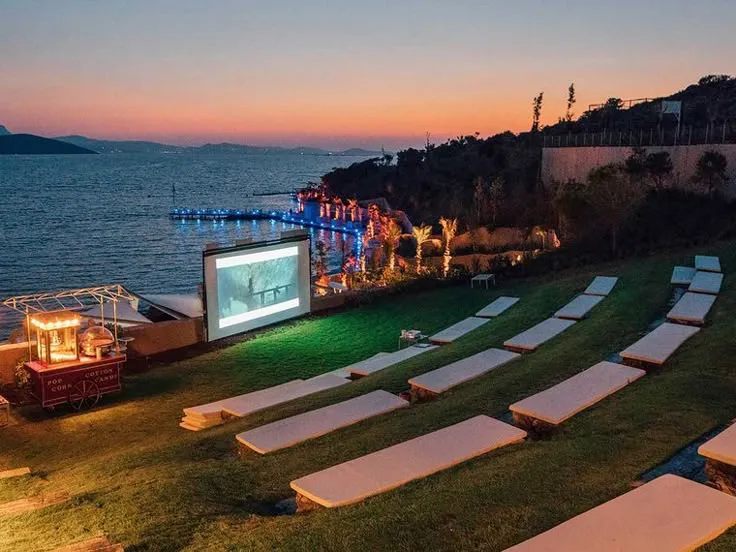
Photo: outdoor seaside theatre box office ticket window evening Mediterranean, via i.pinimg.com
There's a moment that happens at our box office almost every warm evening between June and September. A family rolls up ten minutes before curtain — sandals, sunburned shoulders, the works — and the dad asks the question every tourist town hears: "So what's this gonna run me?"
When our volunteer behind the window answers, "Whatever feels right to you," you can watch the math happen on his face. He'd budgeted twenty euros. Maybe his kids wanted gelato after. Suddenly the evening works out.
That's the whole philosophy in one awkward, beautiful exchange.
The Problem With Fixed Prices in a Town Like Paphos
Here's the thing about a tourist economy: nobody's wallet looks the same on any given Tuesday. We get cruise passengers who've budgeted like it's a Broadway night, and we get backpacking students stretching a hosteling budget across two weeks of Cyprus. A local retiree on a pension and a luxury resort guest might stand in the same ticket line on the same night.
A flat ticket price — even a modest one — quietly decides who gets in. Fifteen euros is nothing to some and a genuine decision to others. Our pay-what-you-can model simply admits what we already knew: the person who pays five and tells ten friends about the show is worth more to us than the person who pays fifteen and tells nobody.
And before you ask — yes, we've done the math. Volunteer treasurer Maria Kyprianou keeps the spreadsheets, and she's blunt about it: "People are more generous than you'd expect. We average out fine. The tourists who can pay, often do. The locals who can't, come anyway. And an empty seat earns exactly zero."
How It Actually Works
The system is deliberately low-friction. There's a suggested price — fifteen euros, which covers roughly a third of that night's real costs — posted on the window and our site. Pay it, pay more, pay less. No forms, no proof-of-hardship paperwork, no side-eye at the window. Cash in the box, card on the reader, or a tap on the website if you're booking ahead.
Our front-of-house volunteers have developed a kind of folk wisdom about it. Yiangos, who's run the window for three seasons, puts it this way: "The Americans usually round up. The Germans ask if the suggested price includes the program. The locals negotiate — but always toward paying more for a good show, never less. People want to feel like supporters, not charity cases."
That distinction matters. Pay-what-you-can isn't a discount program. It's a trust program.
The American Comparison We Can't Ignore
If you're reading this from Ohio or Oregon, here's the part that should sting a little. Community theatre across the US is struggling — shrinking subscriptions, aging audiences, rent eating budgets alive. And the standard response has been to raise ticket prices to close the gap, which drives away exactly the young, diverse, broke audience those theatres say they want.
Plenty of American venues have experimented with flexible pricing — the Public Theater in New York famously built an entire identity around it, and smaller companies in places like Minneapolis and Portland have tried sliding scales. The results are mixed, usually because the programs get buried in fine print or wrapped in shame.
What a scruffy seaside stage in Cyprus offers is proof of a simpler version: suggested price, honest signage, warm volunteers, zero paperwork. No apps, no tiers, no membership required. The barrier to entry is a smile at a window.
We're not naive. Paphos has low overhead compared to a leased downtown storefront in Cleveland. Our actors are volunteers, our sets are plywood and sea breeze, and the Mediterranean is our rent-free lobby. A theatre with a commercial lease and union stagehands faces harder arithmetic.
But the core insight travels: in communities that feel starved for affordable culture, the constraint usually isn't revenue. It's trust and friction.
Would It Work Back Home?
If you run or volunteer at a struggling American community theatre, here's our honest, unsolicited advice from across the Atlantic:
- Pick one night, not the whole season. Try pay-what-you-can on a Tuesday or a preview night. Contain the risk.
- Post a suggested price. Anchor generosity. A number on the window does more work than a blank box.
- Train your volunteers. The model lives or dies at the point of sale. Nobody should feel inspected.
- Track it like a business. We did. You might be surprised which model actually fills more seats and more hearts.
Maria's summary is the best one-line pitch we've heard: "We stopped asking what the ticket is worth and started asking what the evening is worth. Those are different questions."
So if you're visiting Paphos this summer — cruise passenger, expat, or just a budgeting family who'd rather spend the surplus on gelato — come find us by the water. Pay what feels right.
The show, as always, will be worth it either way.